Paradiso
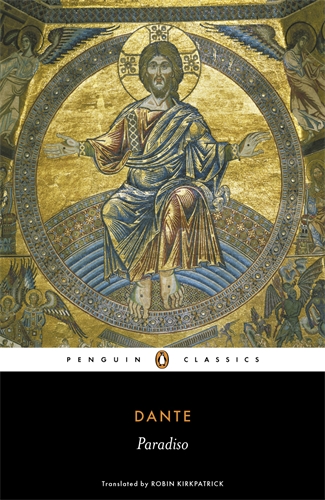
Paradiso: Language and the Light of Truth
Paradiso, the final cantica of the Commedia, presents the greatest challenge to both poet and reader. Here, Dante seeks to articulate the ineffable: the soul’s ascent into divine truth. Unlike the visceral imagery of Hell or the moral pedagogy of Purgatory, Paradiso offers a vision of cosmic harmony, where intellect and love converge.
Guided by Beatrice, Dante rises through the celestial spheres, each reflecting a different mode of blessedness. The souls he meets—saints, mystics, theologians—speak not only of their own salvation, but of broader truths concerning divine justice, predestination, and the limits of human understanding. These dialogues unfold in a philosophical register, yet remain intensely poetic.
The poem repeatedly draws attention to the inadequacy of language. Dante often reminds us that his words fall short of the reality he glimpses. This is not a failure but a thematic choice: Paradiso is a poem that enacts the limits of human reason even as it aspires to transcend them. Images of light, music, and geometry replace narrative drama, pointing to a world where unity replaces conflict.
Dante’s cosmology, grounded in Ptolemaic astronomy and Christian theology, may seem distant to modern readers. Yet his exploration of order, meaning, and beauty speaks to enduring philosophical concerns. The journey through the heavens becomes a metaphor for the intellect’s longing for truth and the heart’s yearning for love.
In the final cantos, Dante beholds the divine essence, culminating in his vision of the Trinity and the Incarnation. The poem ends with an act of perfect alignment: the poet’s will moving in harmony with the divine. “L’amor che move il sole e l’altre stelle” is not merely a final line—it is the consummation of the entire journey.