Meditations
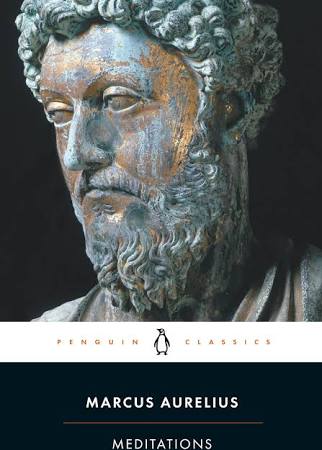
On Reading Meditations by Marcus Aurelius: Up to Book 3
My interest in Marcus Aurelius predates any real engagement with Stoic philosophy. I’ve long been drawn to his historical singularity: a man of immense power who seemed more concerned with the condition of his soul than with the machinery of empire. The last of the so-called Five Good Emperors, Marcus stands at the threshold of a Roman world already showing signs of political fatigue. His reign was marked by military struggle, personal loss, and administrative burden; yet what survives most vividly is not a record of conquest, but a collection of inward reflections.
Like many readers, I first encountered Marcus not through his prose, but through the stray aphorisms that circulate online and in popular culture. “The impediment to action advances action. What stands in the way becomes the way.” “You have power over your mind — not outside events.” They are pithy, often quoted without context, and sometimes risk sounding like slogans. Still, even in this fragmented form, the voice behind them is calm, insistent, and unfashionably sincere. It was their persistence that eventually led me to Meditations itself.
Now that I’m into Book 3, I can see that the text defies generic expectations. It is not a systematic work of philosophy, nor is it autobiographical in any straightforward sense. It reads, instead, like a philosophical notebook — a series of mental rehearsals, written by someone determined to hold himself to account. There is no narrative arc, no developing argument; rather, there is a consistent effort to return, again and again, to a particular mode of ethical attention.
Book 1 is disarming. It consists entirely of acknowledgements: a litany of influences, named and described in terms of their virtues. Marcus thanks his grandfather for teaching him good manners, his father for modesty and composure, his tutors for instilling discipline and intellectual honesty. These tributes are restrained, even severe, but quietly moving. He does not sentimentalise his gratitude; he itemises it. The moral life, for Marcus, is received through example, not theory.
With Book 2, the tone becomes more internal. Marcus addresses himself directly, often with imperatives. He reminds himself that life is short; that death is not to be feared; that fame is meaningless; that other people’s opinions are of no consequence. The repetition is not redundant. Rather, it mirrors the daily effort of ethical maintenance — a Stoic vigilance against self-deception. The writing becomes a tool, a mental exercise designed to align thought with action.
By Book 3, this inward posture intensifies. Marcus speaks often of nature — both cosmic and human — and of the necessity of living in accordance with it. He is particularly severe with the passions: anger, indulgence, vanity. The good man, he insists, does not allow himself to be disturbed by the behaviour of others; he acts justly, without complaint. This is not detachment for its own sake, but a principle of moral economy. Time is limited, and must not be squandered on what lies beyond one’s control.
At times, I find myself resisting aspects of this ethic. I am not a Stoic, nor am I wholly convinced by the Stoic valuation of emotional restraint. There is something about the rejection of grief, pleasure, or longing that feels at odds with the fullness of human experience. And yet, Marcus never comes across as inhuman. On the contrary, there is an unmistakable humility in his tone. He is not preaching; he is practising. The austerity of the thought is matched by the modesty of its expression.
Stylistically, the writing is stripped of ornament. The sentences are short, declarative, often abstract. There are few concrete details, almost no narrative or anecdote. The very texture of the prose seems intended to reflect Stoic values: clarity, economy, precision. But this is not literary dryness. There is beauty in the restraint, and a kind of moral elegance in the cadences. Marcus does not write to dazzle; he writes to endure.
What makes Meditations compelling — even moving — is the sense that Marcus is not writing from a place of triumph. He is not a man who has overcome the world; he is a man still wrestling with it. His reflections are marked by fatigue, by frustration, by the weight of imperial duty. He knows that life is short, that others are unreliable, that death is coming; and yet he writes in order to remain steady, to keep himself from becoming what he despises in others.
There is something very modern about this struggle. We, too, live in a world that feels unmanageable; we, too, are bombarded by noise, by demands on our attention, by the lure of distraction. Marcus offers no programme of escape. Instead, he offers a discipline of attention, a refusal to be drawn into what does not matter. It is not comfort he seeks, but coherence.
Three books in, I already sense the rhythm of the work: a slow circling around a few essential truths, stated from different angles, refined by repetition. There is no narrative satisfaction, no epiphany. But that is, perhaps, the point. Meditations is not about revelation; it is about returning, each day, to the moral task of being human. It does not dazzle — it steadies.